
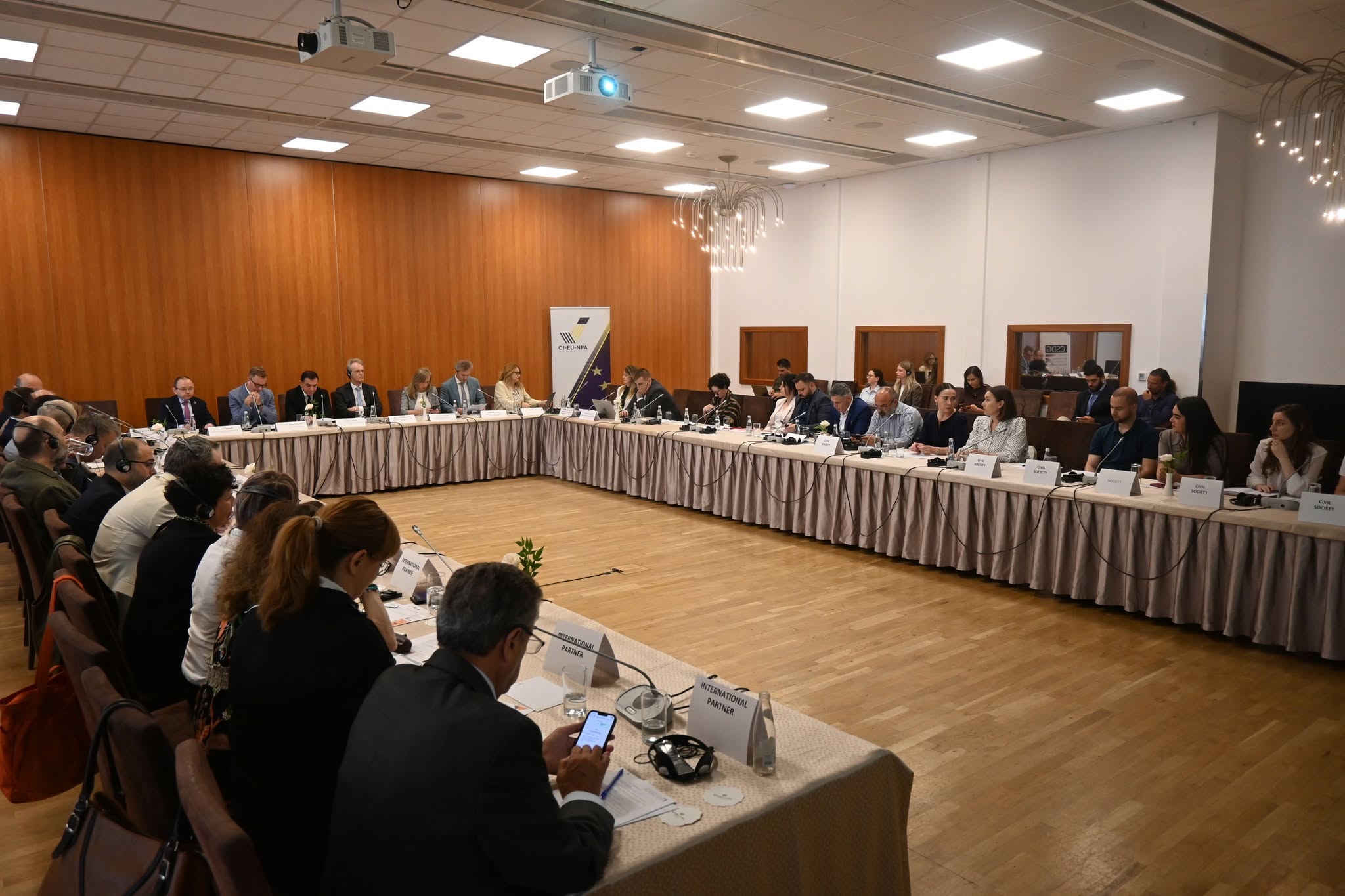
The Center for the Study of Democracy and Governance (CSDG) organised a roundtable discussion and presented its latest report on the performance of Albania’s specialised justice institutions, bringing together representatives of justice institutions, Parliament, international partners, civil society, and leading experts.
The report and the discussions highlighted that Albania has entered a new phase of justice reform, where the focus should no longer be limited to the number of investigations, prosecutions, and convictions, but rather to the real impact these results have on corruption, organised crime, the economy, and the functioning of public institutions.
Among the key findings and issues discussed were:
 the need to move from measuring institutional performance to assessing systemic impact;
the growing importance of financial investigations and asset tracing as the most effective tools for targeting the economic foundations of corruption and organised crime;
the persistent gap between asset seizure and final confiscation, which remains a major challenge in recovering illicit gains;
the transformation of corruption and organised crime into increasingly sophisticated, financially driven phenomena that are deeply intertwined with the formal economy;
the need to shift from focusing solely on individual offenders to identifying and dismantling the structures, networks, and mechanisms that generate and sustain corruption and organised crime;
the importance of institutional integrity, professional specialisation, and capacity-building in responding to emerging investigative challenges;
the critical role of interinstitutional and international cooperation in addressing criminal activities that transcend institutional and national borders;
the importance of education, prevention, and the promotion of integrity as complementary tools alongside criminal prosecution;
the role of Parliament and parliamentary oversight in assessing the effectiveness, impact, and accountability of justice sector reforms;
the direct link between progress in the fight against corruption and organised crime and Albania’s European Union integration process.
The discussion reaffirmed that the next phase of reform is no longer about building institutions, but about ensuring that they deliver sustainable results, weaken the criminal economy, strengthen institutional integrity, and generate meaningful and lasting impact on the state and society.
 The report aims to contribute to the broader debate on how the success of justice reform and the effectiveness of institutions tasked with combating corruption and organised crime should be assessed in the years ahead.
 The document is available and can be accessed through the link https://csdgalbania.org/…/Report-Corruption-Organised…