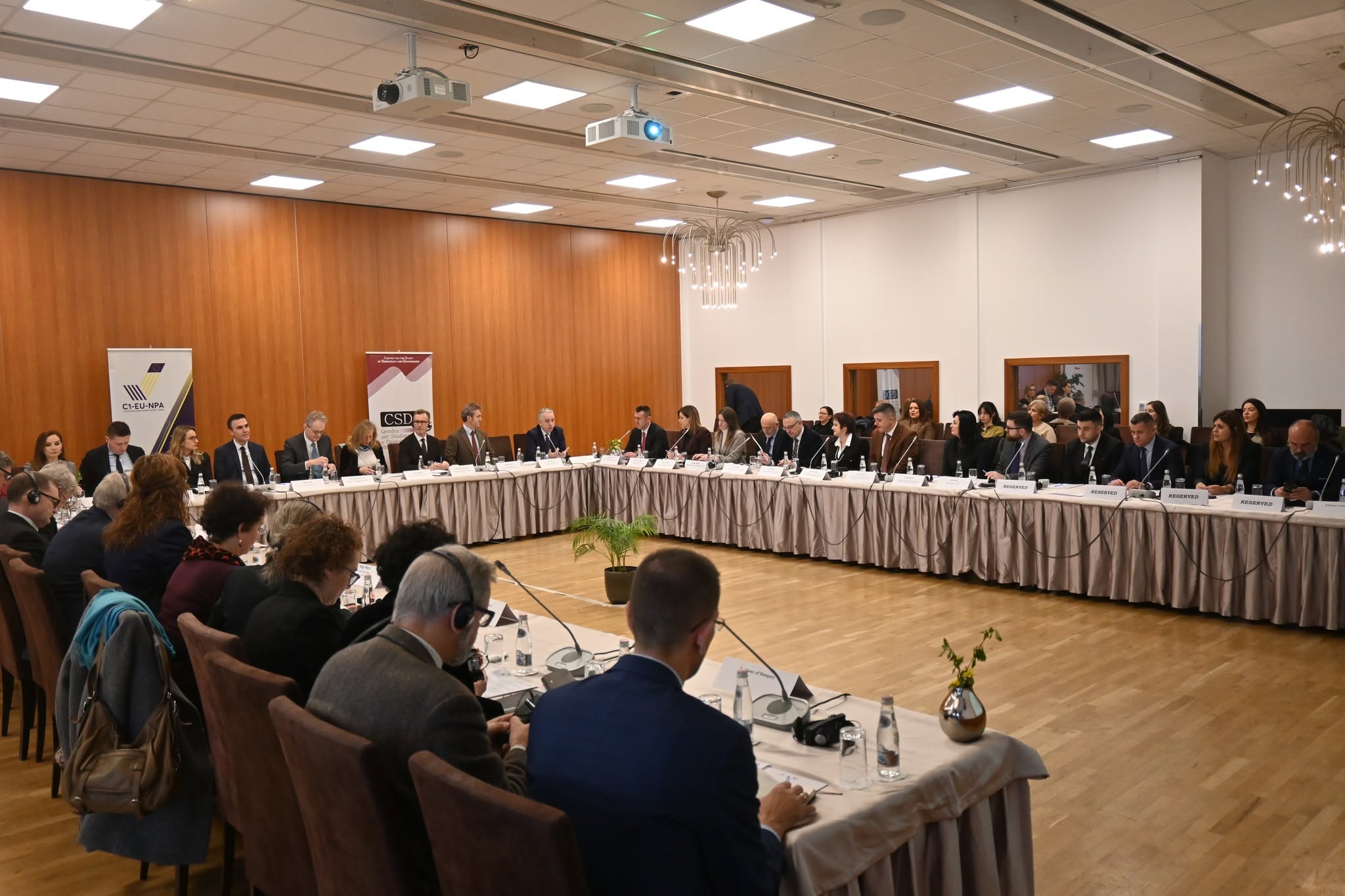
Within the framework of the European Integration Month, which for the fifth consecutive year serves as a platform for reflection on the key issues of Albania’s path toward the European Union, the CSDG – Qendra për Studimin e Demokracisë dhe Qeverisjes organized a roundtable presenting a structured assessment of the functioning of the High Prosecutorial Council.
At a moment when the justice reform has moved beyond its establishment phase and entered the stage of institutional consolidation, the central question is no longer whether mechanisms exist, but how effectively they function, how sustainable they are, and to what extent they generate public trust.
This report introduces an important innovation: it does not merely examine the legal framework, but tests in practice the effectiveness, efficiency, procedural quality, compliance with standards, and long-term sustainability of the self-governance system of the prosecution service.
For the first time, such an analysis:
 combines the normative framework with real decision-making practice,
is grounded in official documents, institutional data, and interviews with key system actors,
and provides a measurable reference point for future institutional development.
The findings indicate a visible process of consolidation, reflected in decision-making stability, a comprehensive normative architecture, functional disciplinary mechanisms, and structured transparency.
At the same time, they highlight challenges related to the quality of implementation, predictability of practice, the analytical dimension of accountability, and the need for stronger institutional capacities.
The discussion was enriched by contributions from panelists with direct experience in the governance of the prosecution system, parliamentary oversight, the international dimension of the reform, and public policy analysis. Their perspectives offered not only critical reflection, but also professional insight into the balance between independence and accountability, the need for standardization of practice, and the real challenges of institutional consolidation.
This report aims to establish a measurable and time-comparable instrument that serves as a reference point not only for today’s assessment, but also for future evaluations ensuring that the progress of the system is not reduced to perception, but assessed on clear, transparent, and sustainable grounds.
 The full report is accessible at the link below: